A Civic Portrait
of America
Students and their communities share the America they want. Their words create a living picture of our country’s hopes and values, providing real data for students to analyze, compare, and discuss.
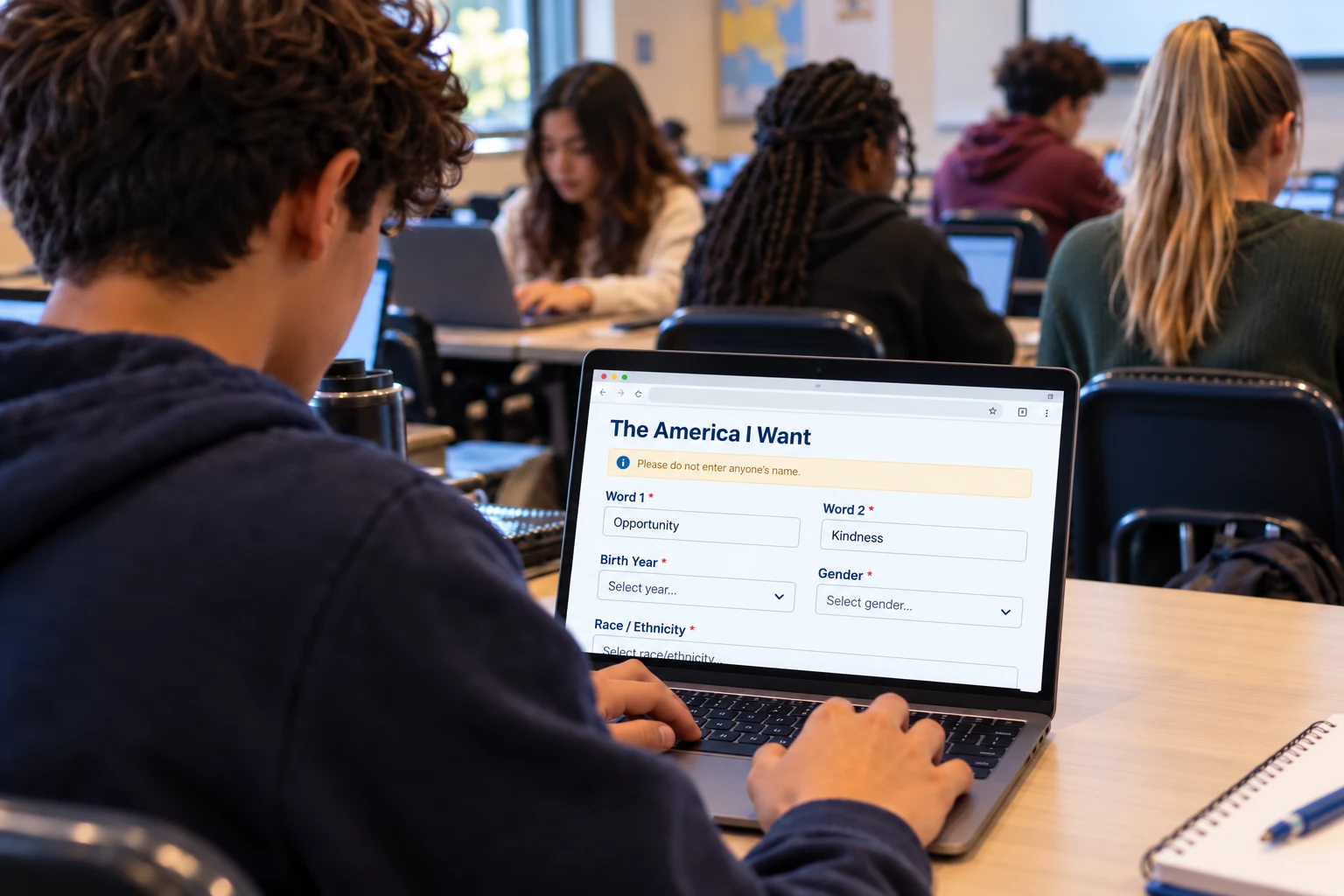
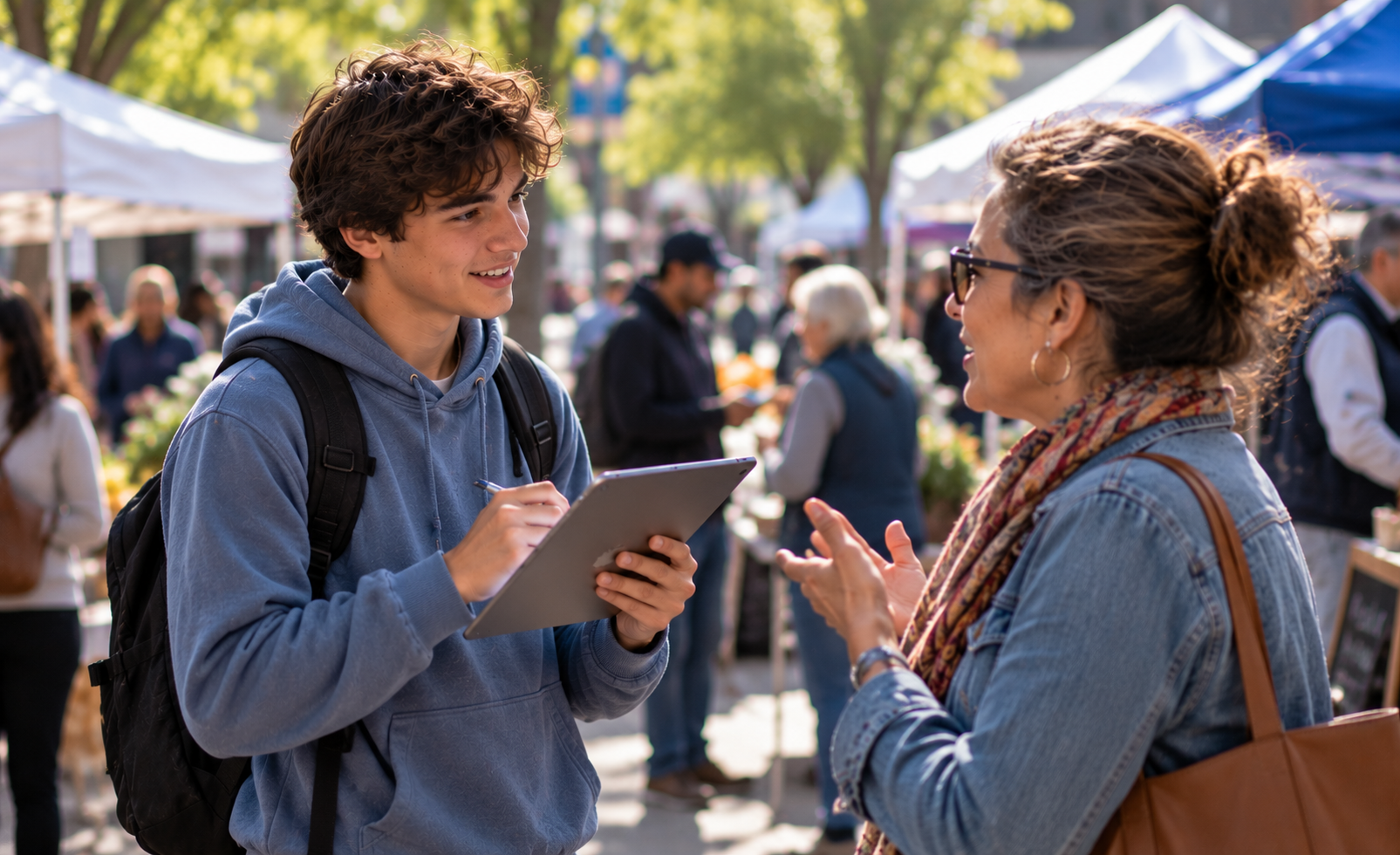
Schedule a demonstrationTo protect student privacy, we use AI-generated images to represent the classroom experience.
How it works
Experience Democracy by Practicing It
One question.
Two words.
A national picture.
Students answer one simple question:
“What kind of America do you want to live in?”
Each student chooses two words that describe the kind of country they want to live in. There are no right or wrong answers. Students choose the words that matter most to them.
From the classroom to the Community
Students take the same question into their communities, interviewing adults of different ages and backgrounds and asking each person to choose two words of their own.
The result brings student and community voices together, giving students the experience of listening to perspectives beyond their own and giving adults a chance to see how their aspirations for America compare with those of a new generation.
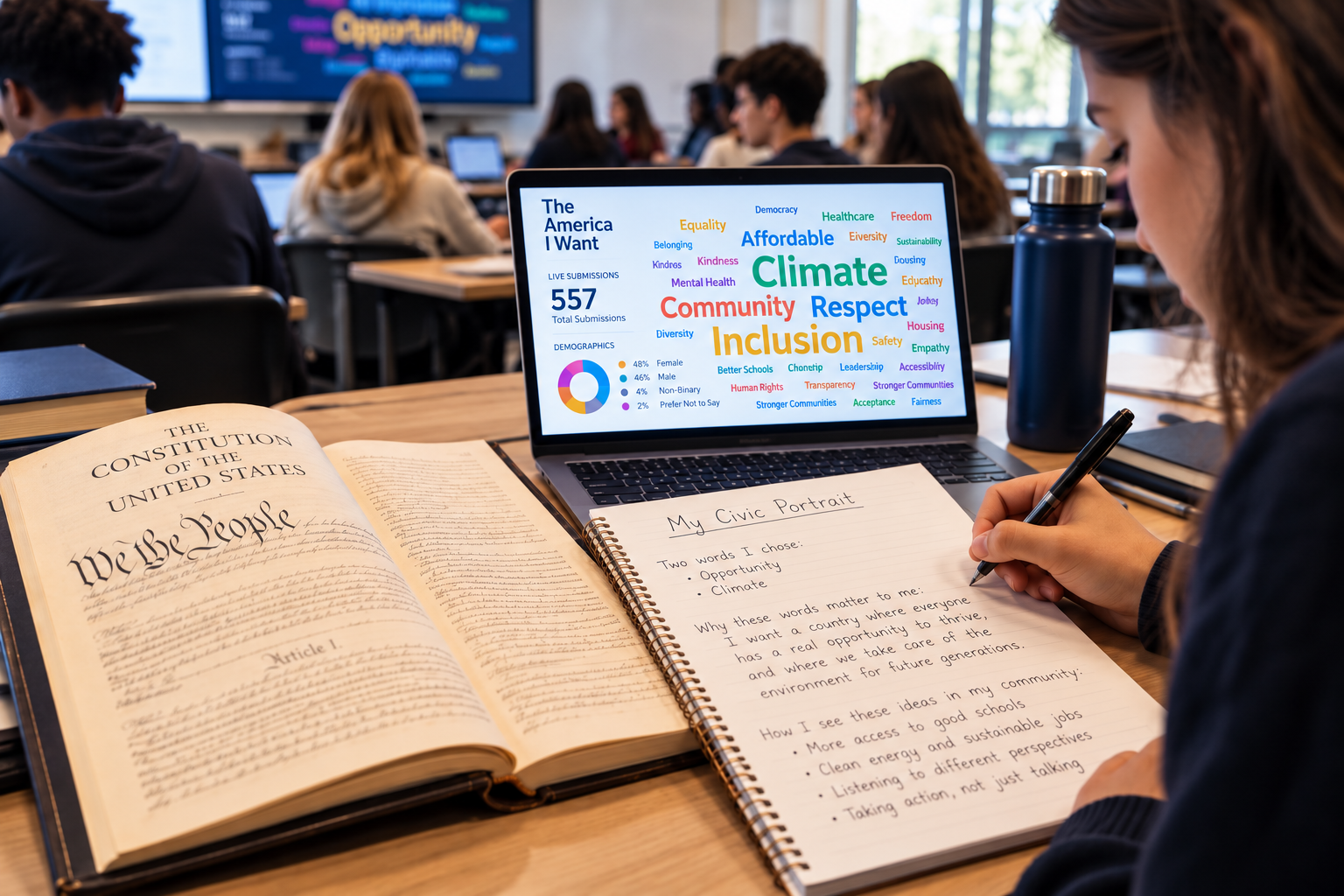
Words Create Civic Portraits
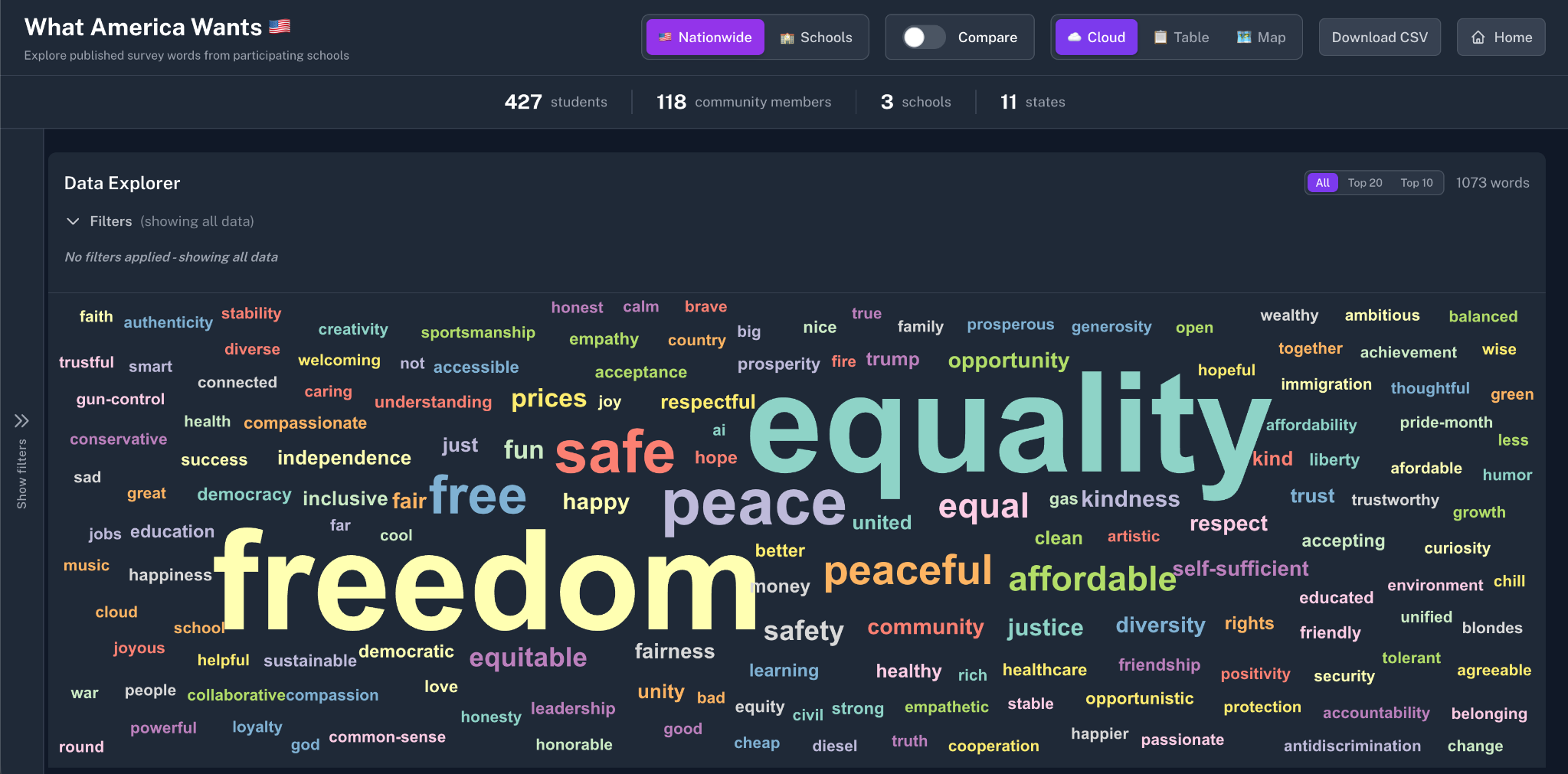
Student and community responses come together on the platform to create Civic Portraits. Words chosen most often appear larger, making it easy to see what matters most. Civic Portraits can be compared across schools, communities, states, regions, and the nation.
Teachers Turn the Words into Civic Learning
Teachers use the Civic Portraits to start classroom discussions, digging beneath the words to explore why students chose them and what they signify.
Students also examine how their words connect to the Constitution, including its principles, rights, and responsibilities, turning their own choices into a starting point for civic learning.
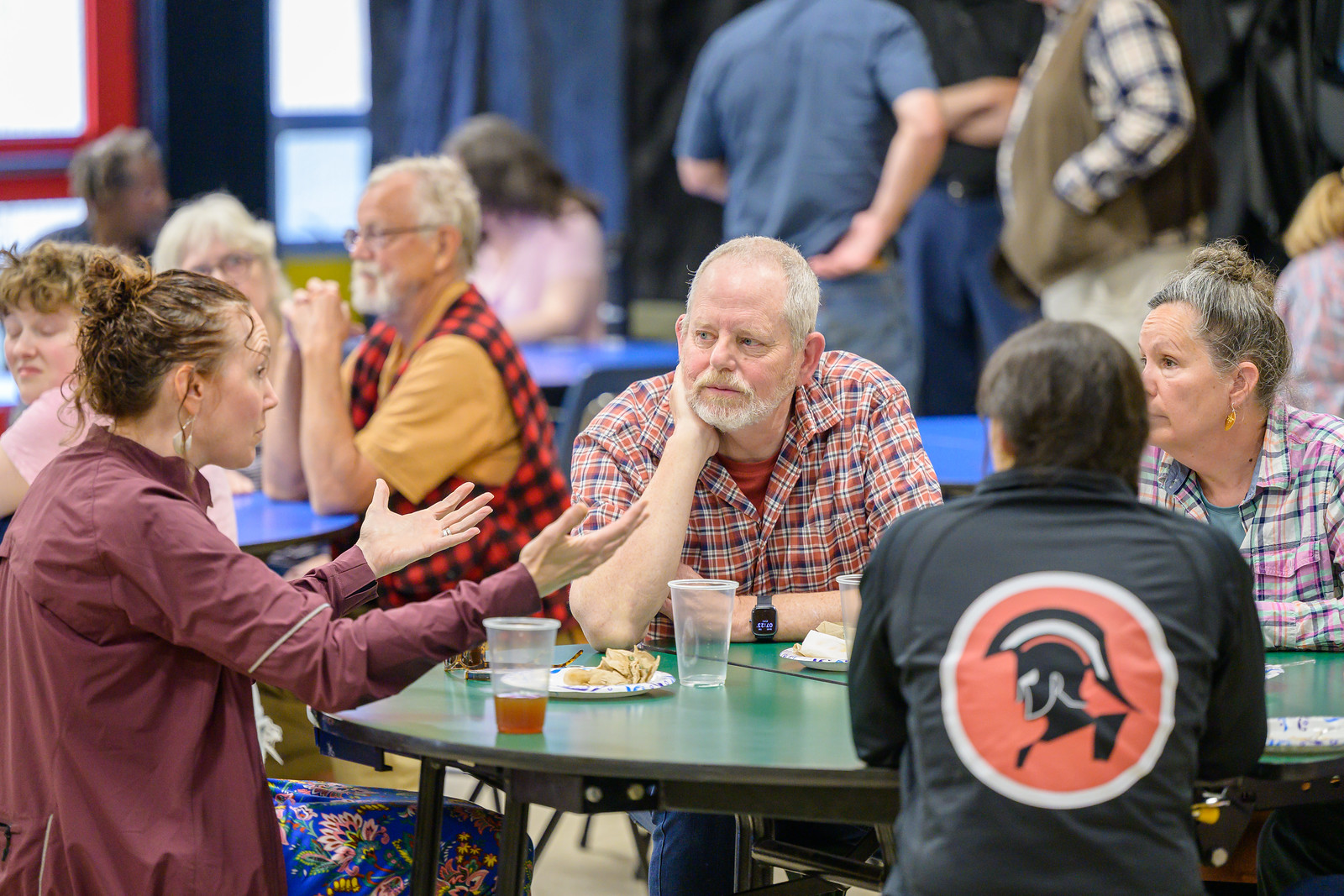
Students Lead the Community Conversation
Students invite parents and other members of the community into the school and lead the conversation themselves. Together, they look at the student and community Civic Portraits, discover the similarities and surprises, and talk about the America they want.
It is civic engagement at its most natural: people coming together, listening to one another, exchanging ideas, and enjoying the conversation.
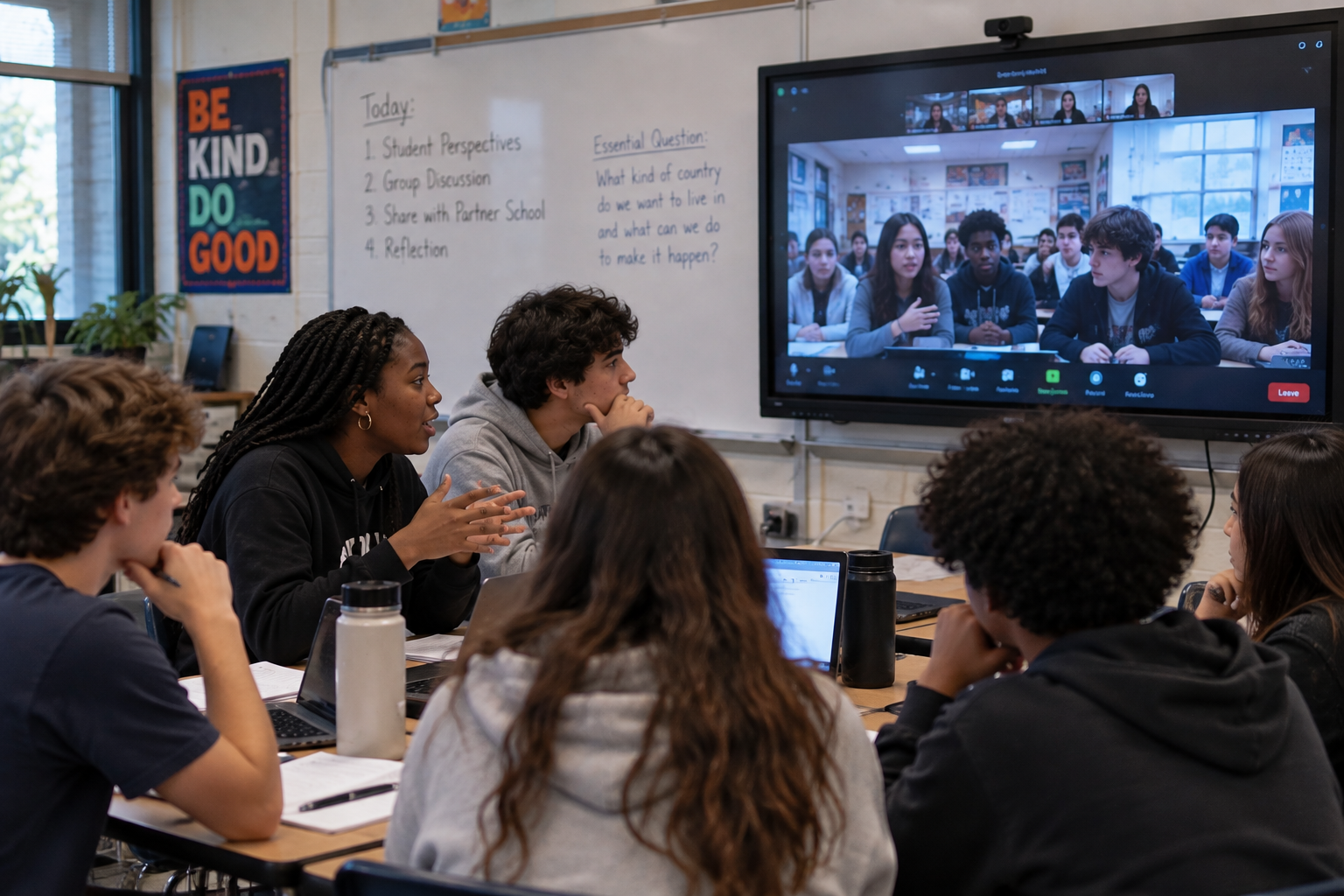
When Classrooms Connect, the National Conversation Begins
Students from different parts of the country meet virtually to compare their Civic Portraits and talk about the America they want.
In the process, they get to know their peers in other regions and communities, discover where their aspirations are shared and where they differ, and learn to listen to perspectives beyond their own.
This is where individual classroom conversations become a national conversation.
The America I Want
Watch on Vimeo ↗A Student’s View: Olive Estrin
Watch on Vimeo ↗How it began
The question that started everything.
Before there was a platform, there was a question, asked of young adults, politicians, community leaders, and influential voices across America:
“What is the America you want?”
These videos are where the project started. Their answers showed the power of a simple question and helped inspire what The America I Want has become.
The America I Want is...
Laurie L. Patton
President, Middlebury College - Vermont
Howard B. Dean
Fmr. Governor of Vermont
Governor Phil Scott
Vermont
Loretta Ross
Feminist, academic, writer and activist - Texas
Gen. Anthony Zinni
Fmr. US Marine Corps General and Commander in Chief of the US Central Command (CENTCOM) - Virginia
Senator Peter Welch
Vermont
Fmr. Governor Jim H. Douglas
Vermont
Rev. Dr. Katharine Rhodes Henderson
New York
Submissions
Samantha West
Edward Lu
Julisa Juarez
David Otis
Logan Sy
Jelinda Metelus
Spen Muller
Lexi Warden
Donors & Foundations
The platform is built. Schools have tested it. Now we're ready to take it national.
Three and a half years of development and investment have created and tested the platform in schools across the country. Students and teachers have embraced it. We are now seeking investment partners to help bring The America I Want to schools nationwide.